Chico Soup with Red Chile
November 15, 2006
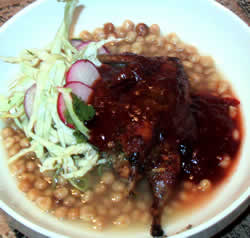
Having worked so hard this fall to prepare the chicos, I was pleased to make chico soup with a twist. While most chico soup recipes call for roasted beef ribs, pork, or chicken, I decided to use a traditional Mexican game bird instead: the humble quail.
This recipe has three main parts: chicos, quail, and red chile. I suggest you make the red chile in advance and freeze the leftovers for other dishes like enchiladas or huevos rancheros. The quail can be made using my unique Garlic and Cumin pesto recipe. I have posted this recipe separately so as to give you a better perspective about the ingredients that can go into chicos, but also to edify the glorious little kernels that can be eaten all by themselves.
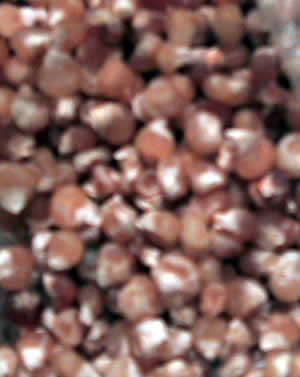
There are few things as simple and tasty as a pot of fresh cooked chicos. All that is required is water, chicos, pressure and time (sort of like the creation of igneous rocks, minus the chicos). First, you will need the following:
- 1 c of chicos
- 5 c of water
- salt to taste
- pressure cooker or crock pot
Step One: To clean the chicos, take the chicos out of the bag and spread them on a table. Pick out the burnt chicos. Place chicos in a small bowl,and slowly pour them into another bowl while blowing on them. This process removes any excess chaff on the kernels that remains. Rinse chicos in a colander or sieve.
Step Two: Place chicos and water in a crock pot or pressure cooker. Understanding the size of your cooker may vary, you can add 4 c of water instead of 5 c (I just like a lot of chico juice). If cooking in a crock pot, cook on low overnight and immediately turn off in the morning (about 8 hours later). If cooking in a pressure cooker, cooking time will be 50 minutes after the pot starts to "chiar" or hiss. remove from the heat and cool. Serve in bowls with salt to taste, or add red chile for good measure.
Chicos are traditionally served in a fresh pot of beans or with a meat of some kind. You can use beef, chicken, or whatever game bird or other meat you like. My next post contains a recipe for garlic-cumin pesto quails over chicos in red chile. My only caution is that the quails must be cooked right before serving on order to keep them tender and juicy, otherwise they dry out in the oven and turn that horrid grey color that many game birds turn when overcooked. EEK! For now, enjoy the simplicity of cooked chicos with salt and perhaps a bit of chile.
Labels: chili, corn, green chile, New Mexico, red chile, soup, traditional


Huevos Rancheros
March 13, 2006

Once again, the basic red chile (see post 1/18/06) saves the day. Huevos rancheros provide an amazing Saturday morning breakfast. I suggest that you cook this when you have some time and if you or a guest are very hungry.
You will need: 1 potato, rinsed and diced; eggs; red chile (see post 1/18/06); corn tortillas; cheese (I prefer jack); refried beans; chorizo sausage.
Step One: Begin cooking this dish by frying up the potatoes in about 3 tbsp of vegetable oil. You should have about 1 cup or more of potatoes for 2 people. Fry over medium-high heat until golden brown.
Step Two: Using beans you made in the crockpot (see post 10/18/05), or a can of pinto beans, make refried beans by pouring them into a skillet with 3 tblsp of vegetable oil. Let liquid cook off and mash with a fork. Salt to taste and set aside.
Step Three: Reheat red chile (see post 1/18/06) in the microwave or over the stove and set aside for service.
Step Four: In a saute pan or comal (round castiron pan with no edges) heat up corn tortillas (traditionally you fry these for this dish but that is a lot of fat for one day). Place two tortillas on a plate and add a scoop of beans on each, cheese, and then an egg cooked to your liking (for poached eggs, see post 10/23/05). Smother this in red chile. Eat with a side of potatoes you just fried or if you like sausage, I recommend chorizo. Eat it up.
Labels: breakfast, corn tortillas, eggs, potato, red chile
Vegetarian Chile Over Rice
February 24, 2006

Beans are a major source of protein, iron, B vitamins, folic acid, and starch. For vegetarians, this plant is perhaps the most important part of a healthy diet. This dish uses a lot of beans and is a fast meal when you are in a hurry. This chile has a very different flavor from the black bean soup recipe (post 12/20/05), but if you like black beans, I suggest that recipe specifically because the flavors posted there marry well for that particular bean.
You will need: 1/2 of a bell pepper diced; 1/4 white onion, diced; 4 cloves crushed garlic; either fresh red chile (that you make and have frozen, see blog from 1/18/06) or powdered, use 2 tbsp of powdered chile or 1/2 cup of fresh chile; 1/2 tsp of cumin; 2 regular sized cans of beans, I like to use a can of pinto and a can of mixed beans that includes kidney, black, and pinto beans; 1 c of vegetable stock; a 28 oz can of diced tomatoes; brown rice.
Step One: Cook 2 cups of brown rice either in a rice cooker or pot according to directions. Start the rice before starting the soup.
Step Two: In a large pot, saute onions, garlic, and bell pepper in 3 tbsp of vegetable oil over medium heat until translucent. Add the 2 cans of beans with their liquid, and 2 more tablespoons of vegetable oil. Cook for 7-10 minutes, stir often.
Step Three: Add spices, salt to taste, chile, vegetable stock, and tomatoes. Simmer for 15-20 minutes.
Step Four: Serve chile over rice and a side of quesadillas. I make my quesadillas with either corn (for gluten free eating) or flour tortillas and jack cheese (chedder isn't quite as flavorful). Salt to taste.
Labels: pinto beans, red chile, rice, soup, tomatoes
Posole for Vegetarians
January 28, 2006

Following up on my blog from January 18 (long overdue, I apologize), I wanted to post a few more recipes that use the basic red chile I described in that blog. This chile forms the base for a good posole, and if you have left over chile from making it, you can simply freeze it, and thaw it out for use in this stew.
Posole is another native dish of the southwest and Mexico. Posole is a variety of corn that is called hominy in English. You can buy it dried, frozen, or cooked and canned. I prefer to buy the cooked canned variety from Juanita brand foods. You can buy it form your grocer and find it in the Mexican food aisle. Posole is very light in flavor and if you are vegetarian, vegan, or have a gluten allergy, this dish is perfect for you. I have modified the ingredients to accomodate the non-meat eater, but you can always add pork or beef ribs to this dish for a tasty treat.
You will need:
- 1 cup of the red chile (see blog from 1/18/06);
- 1 28 oz can of hominy;
- 1 c of vegetable stock;
- 2 c of water;
- onion; garlic; cabbage; raddish for garnish.
Step One: In a stock pot, saute about 1/4 c of diced white onion with 3 cloves of crushed garlic in 2 tbsp of vegetable oil until translucent. Cook this on medium heat.
Step Two: Add the chile and cook for another 7 minutes. Add the hominy, vegetable stock, and water. Simmer this for about 15 minutes. Salt this to taste.
Step Three: For spices, experiment with oregano, corriander, cilantro, cumin, and if you want texture, add diced potatoes. Serve the soup in bowls and top with shredded green cabbage, thinkly sliced onions and raddishes, and serve with a wedge of lime. It's simple and perfect for winter's chill.
Eat this with corn rather than flour tortillas.
Red Chile for Enchiladas
January 18, 2006


This photo array represents a 1-2-3 of making red chile Mexico style. This red chile is different from the process used by many people in New Mexico who make red chile from ground red chile as opposed to using the dried pods off the ristra like this recipe. See blogs from December 15th and 24th on the assembly of enchiladas, fillings, and presentation. For the person who commented on what to do with green chile (see comment on Dec. 24th), I promise to post a green chile sauce, different from green chile stew, to help you make those types of enchiladas. The post on the 15th of December does show a green chile enchilada. Yummy.
However you choose to make your chile, you should try to test different spices, but experiment with garlic, onion, cilantro, cumin, salt, and corriander. You can also add tomatillos for texture (tomatillos are small green tomato-like fruits that are related to the gooseberry, not tomatoes). Be sure to remember that quality red chile pods are the key ingredient to any chile. Much of the country's chiles come from New Mexico and California. Choose pods that you dry yourself (on a ristra) or in a bag from the grocery store. Be sure that they aren't crunchy and discolored (that means they are old). The dry chile should be a little waxy and have a nice deep red-orange color.
Step One: Remove stems from the chiles and place in a stock pot. Cover with water and boil for 15 minutes.
Step Two: Place chiles in a blender with a bit of water. Blend until smooth.
Step Three: Strain the mixture and place back in the pan. You should cook this in some vegetable oil or lard. Cook on medium, stirring to avoid burning.
You should spice this up the way you like it. Don't massacre this chile with tomatoes, tomato sauce, or anything else. Don't try to enter this chile into a chile contest - you will be sorely disappointed because this is a chile sauce that is to be used for enchiladas or Indian tacos (fry bread with meat, beans, lettuce, and cheese). This method for cooking chiles is native to the southwest, and Mexico, and forms the base for many native foods of the region including menudo, posole, tamales, and various marinated meats and stews.
Pueblo Indians in New Mexico are credited with the versatility of red chile and you can taste traditional dishes using it at the Pueblo Indian Cultural Center in Albuquerque, NM (12th and Menaul). The Center has a restaurant where you can purchase food and order tamales for take-out. These dishes are native to New Mexico and the Pueblo people whose farming techniques made the southwest bloom with varieties of squash, corn, chile, and beans.
Labels: New Mexico, red chile
Mom's Christmas Enchiladas
December 24, 2005

Labels: corn tortillas, New Mexico, red chile
If You Can't Go To El Patio, Bring El Patio To Yourself
December 15, 2005

I know - you all feel abandoned - but really, it is not my fault. The digital camera I've been using is not giving me my pictures - so many bids for forgiveness. I will try to catch up now that my roomate is back and can hopefully fix the camera bug.
Well, I love and miss enchiladas--especially my mom's. I promised her, however, that I would not divulge her green and red chile recipes on my blog because every Mexican knows better than to post their chile recipes for all to see: otherwise, you have some half-assed jerk publishing it in his food network cookbook and making money off such a simple thing as chile, onions, garlic and spices with water. Chile is not so much about measurements, rather it is about the cooking procedure and method--about roasting your chile right, not overcooking the onions and garlic, and reducing the caldo (broth) so it thickens without burning or overcooking the chile.
For you non-chile officianados, red chile is basically the ripened form of green chile. Red is often dried, hung to dry on a ristra or ground into a powder. Green is roasted and peeled. To eat it year-round, you have to buy it in August-September, roast it, freeze or can it, and then use it at the time of cooking. Chile is a labor of love and my favorite place to eat it is at El Patio restaurant in Albuquerque, NM (home of all chile, red or green, and if you order both, it's called Christmas). To my delight, El Patio started canning its chile and selling it at the restaurant. I purchased the red and green to make enchiladas al estilo Nuevo Mexico. Unlike traditional Mexican enchiladas, the NM kind are flat and not rolled. The layers usually consist of hamburger and potatoes, but for this recipe, I used chicken and beans. The vegetarian plate featured in the photo is of course spinach and beans.
You will need:
- one 12 pack of corn tortillas,
- 2 cans of El Patio red and green chile (you can always purchase 505 brand of canned green chile at Safeway or Smith's),
- a crock pot of fresh beans (frijole de bolita was used here), or 2 cans of pinto beans that are cooked with 3 tbsp of vegetable oil in a pot over medium-high heat for 10 minutes
- diced onion,
- spinach (fresh baby spinach), lettuce, cheese (always use Monterey Jack),
- shredded chicken (2 chicken breasts whole with bones, boiled in a pot over high heat for 12-16 minutes, then shredded with a fork),
- 1/2 c of oil to fry tortillas (replenish as necessary).
Step One: in a small egg pan, heat up your oil over medium heat.
Step Two: on a plate, serve a scoop of beans, quickly fry the tort on each side for about 45 seconds, and place on top of beans. Add more beans or chicken, spinach, cheese, onions and scoop of chile.
Step Three: Repeat step two. Top off with cheese, lettuce, and tomato. Serve with a side of beans.
It's like El Patio in my kitchen! For those of you in ABQ, break me off a little next time you are on Harvard drive and jonzen for chile.
For you "heartburn" types and people who ask "is the chile hot?" - don’t bother.
Labels: corn tortillas, New Mexico, pinto beans, red chile

